Table of Contents
World Ozone Day, also known as the International Day for the Preservation of the Ozone Layer, is celebrated every year on 16 September around the globe. But why should students care about a layer of gas hundreds of kilometers above us?
Because the ozone layer is one of the natural protection mechanisms of the Earth. It helps protect life from the Sun’s damaging ultraviolet (UV) radiation. It’s not just about learning chemistry or geography; it’s learning how science, technology, people, and the Earth are all connected.”
For children living in a STEM, robotics, AI, and innovation world, the ozone tale has a crucial lesson: when we understand an issue, we can use science and technology to monitor, solve, and preserve our future.
What Is the Ozone Layer?
Ozone is a gas that is made up of three oxygen atoms. It’s denoted as O3. The stratosphere, a region of the atmosphere, has a higher concentration of ozone and is often called the ozone layer.
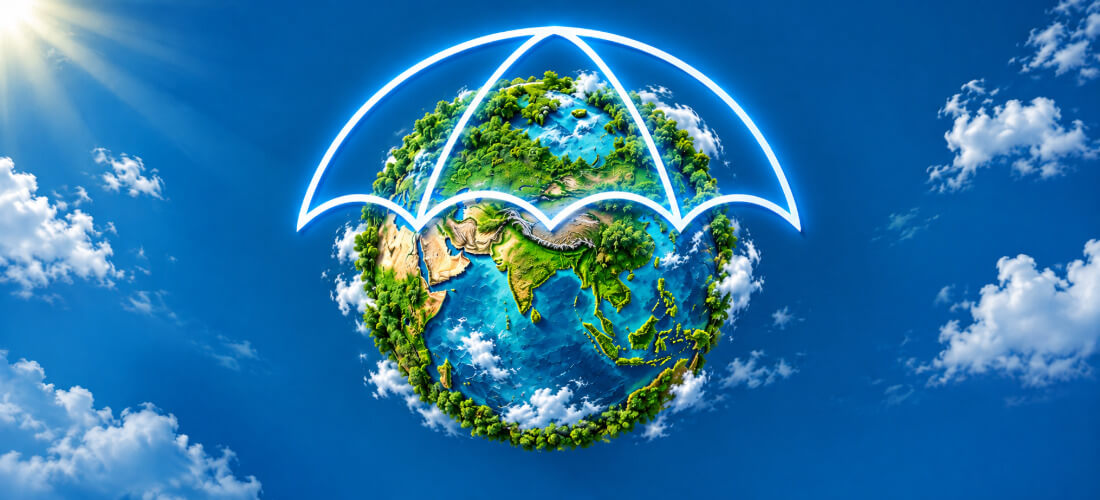
It’s like a natural shield around our Earth. It takes in much of the Sun’s dangerous UV energy before it hits the surface of the Earth. This protection is crucial for humans, animals, plants, and ecosystems.
Without this protection, living beings would face serious risks from increased exposure to damaging UV rays.
So, while we can not see the ozone layer with our eyes, life is affected by its presence every day.
Why Did the Ozone Layer Become a Concern?
For many years, several man-made chemicals were widely employed in products such as freezers, air-conditioning systems, and aerosol products. Some of these compounds, particularly chlorofluorocarbons (CFCs), could reach the stratosphere and help destroy ozone molecules.
Scientists observed substantial ozone loss, especially in the Antarctic region. It became one of the world’s biggest environmental concerns.
The point of this story, however, is what happened subsequently.
Scientists have been working on the problem. Countries listened to the science. The industries devised alternatives. Governments collaborated.
In 1987, countries enacted the Montreal Protocol, an international treaty to manage and phase out compounds that deplete the ozone layer. The signing of this crucial agreement is commemorated on 16 September.
It teaches kids a great lesson:
Science can tell us what the problem is. Human cooperation can put scientific knowledge into action.
Is the Ozone Layer Healing?
And here’s the good news.
The global effort to phase out ozone-depleting compounds is on track to heal the ozone layer. But that does not mean the problem has gone away or that we can stop paying attention.
The atmosphere is a complex system, and scientists continue to monitor ozone levels and the hole in the ozone layer over Antarctica. Organizations such as the Copernicus Atmosphere Monitoring Service (CAMS) employ observations, models, data analysis, and predictions to monitor changes in atmospheric ozone.
This is where the subject gets quite intriguing for the students.
How can scientists measure something that is so far above us?
They employ science and technology.
Satellites, sensors, computer models, atmospheric observations, data analysis, and forecasting systems all help scientists comprehend what is going on in our atmosphere.
Ozone and Climate Change: Are They Connected?
Ozone depletion and climate change are two distinct environmental challenges, although they are linked.
Some substances that destroyed the ozone layer were also potent greenhouse gases. Thus, the international activities under the Montreal Protocol also yielded major climate advantages.
At the same time, changes in the Earth’s climate can affect atmospheric conditions and ozone chemistry. This is why scientists consider the atmosphere to be one continuous system, rather than a series of individual environmental problems.
This is a vital scientific lesson for students:
Many environmental problems are related to each other.
Understanding these linkages allows us to see beyond isolated challenges and see the wider picture.
Why Should Students Learn About the Ozone Layer?
Environmental education should not stop at memorising facts for a science exam.
When students understand the ozone layer, they begin to understand:
- How Earth’s atmosphere works
- How human activities can affect natural systems
- How scientists identify environmental problems
- How technology helps us monitor the planet
- Why countries need to work together
- How scientific discoveries can influence policies
- Why responsible choices matter for the future
Most importantly, students learn that they are not just observers of the future; they can become problem-solvers of the future.
From Ozone Science to STEM
The ozone layer may seem far removed from robotics or artificial intelligence, but there is actually a strong STEM connection.
Imagine students being given a simple challenge:
How can technology help us understand and protect our atmosphere?
They could explore questions such as:
- How do sensors collect environmental data?
- How can satellites monitor atmospheric changes?
- How can computers process large amounts of environmental data?
- How can AI identify patterns in climate or atmospheric data?
- Can robots help collect information in difficult environments?
- How can data visualisation help people understand environmental changes?
These questions transform environmental awareness into STEM thinking.
Instead of simply telling students, “Save the ozone layer,” we can ask them:
“What could you build, measure, analyse, or invent to help protect our planet?”
That is where awareness becomes innovation.
What Can Students Do to Help?
Students may not be able to create international environmental policies, but they can still make a difference.
1. Learn and Spread Awareness
Begin with learning. Learn about the function of the ozone layer and spread the correct facts with your friends, classmates, and family.
2. Use Resources Responsibly
Our general influence on the environment can be reduced by cutting our use of power and avoiding wasteful use. Numerous little habits of responsibility add up if practiced by numerous individuals.
3. Think Before You Buy
Parents and teachers may help students learn to read labels and choose ecologically friendly products.
4. Participate in School Activities
Schools can organise:
- Ozone Day quizzes
- Poster-making competitions
- Science exhibitions
- Model-making activities
- Classroom discussions
- Awareness campaigns
- STEM challenges
- Data and observation projects
5. Become a Young Environmental Scientist
Students can research environmental concerns instead of just reading about them.
They can gather data, draw graphs, compare observations, investigate solutions, and report their conclusions.
That is to learn through doing.
A Simple STEM Challenge for Students
Here is an idea that can turn World Ozone Day into a hands-on learning experience.
Challenge: Become an Atmosphere Detective
Ask students to investigate:
“How can technology help scientists monitor our planet?”
Students can work in groups and explore:
Step 1: Observe
Research how scientists monitor ozone and atmospheric conditions.
Step 2: Question
What information would scientists need to understand changes in the atmosphere?
Step 3: Design
Create a model or concept for a system that could collect environmental data.
Step 4: Build
Use sensors, microcontrollers, or other STEM tools to create a simple environmental monitoring model.
Step 5: Analyse
Record and organise the data collected by the system.
Step 6: Present
Explain how the system could help people understand environmental changes.
The project does not need to actually measure ozone to be meaningful. The goal is to help students understand the process of sensing, collecting data, analysing information, and developing solutions.
What Does World Ozone Day Teach Us About Innovation?
The ozone story is one of the best examples of science moving to action.
Scientists found a problem. Technology helped us understand it all. Countries worked together to build solutions. Industries had to find workarounds. Progress continues to be monitored.
And now students can learn from the journey.
This is the sort of thinking that STEM education is trying to cultivate.
Today’s student learning about ozone might be tomorrow’s environmental scientist, engineer, robotics developer, data scientist, climate researcher, or AI inventor.
We don’t know who will be the next student to make a solution.
But we can offer them the information and the curiosity to try.
The Bigger Lesson for Students
The ozone layer is a lesson on something far greater than atmospheric science.
It tells us that problems may be solved when individuals grasp their challenges, work together, and use information constructively.
It also reminds us that the duty for the protection of our world is not solely with scientists. Teachers, parents, students, engineers, innovators, governments, companies, and communities all have a part to play.
The world has listened to the science, and the ozone layer is now recovering. That’s a reason to hope, but also a reminder to stay aware and responsible.
Conclusion
World Ozone Day is more than a date in the school calendar.
It is an opportunity to assist learners in comprehending the invisible mechanisms that make life on Earth possible and to show how science, technology, engineering, mathematics and responsible human activity may function together.
The future of our planet will require more than knowledge. It will need inquisitive minds, innovative thinkers, responsible citizens and young innovators eager to ask:
“What’s the matter?”
“So how do we make sense of it?”
“And what can I do or create to improve things?”
That’s the kind of thinking that we should be creating in every school.
When children learn to comprehend the earth, they can learn to protect it.