Table of Contents
A composite lab is a modern, skill-based learning space designed as per CBSE and NEP 2020 guidelines. This blog covers everything about a CBSE Composite lab, including setup, requirements, vocational activities, AI and robotics integration, teacher training, and classroom implementation to help schools create practical and future-ready learning environments.
In schools, a composite lab is a modern, skills-based learning place where students learn through projects, hands-on activities, and real-world applications. The school composite lab and NEP 2020 rules are created as per the CBSE requirements. It integrates STEM education, coding, robotics, AI, and vocational training into a single integrated learning environment.
‘Composite lab‘ means a multidisciplinary setting that can encompass sectors such as agriculture, electronics, mechatronics, carpentry, healthcare, hospitality, and computational learning. With this method, students can build essential composite skill areas such as creativity, teamwork, critical thinking, and problem-solving.
Unlike traditional learning techniques, a composite lab for schools encourages students to actively construct, explore, and develop, making education more practical, interesting, and future-ready.
Why Do We Need a Composite Lab?
The CBSE composite lab is introduced to promote experiential and skill-based learning in schools. According to CBSE norms for school composite labs, schools are encouraged to provide practical exposure alongside theoretical education so students can develop real-world understanding and vocational skills.
CBSE Guidelines for composite labs
Modern Educational Requirements: Today’s education system requires students to move beyond textbook learning. A composite lab helps schools:
- Upgrade practical and technical skills
- Connect classroom learning with real-life applications
- Build creativity and innovation
- Improve student engagement
- Modernize school infrastructure
For example, students studying sustainable farming can practically grow plants, monitor soil conditions using sensors, and analyse data through technology tools. This makes learning more meaningful and application-oriented.
Types of Activities in Composite Lab
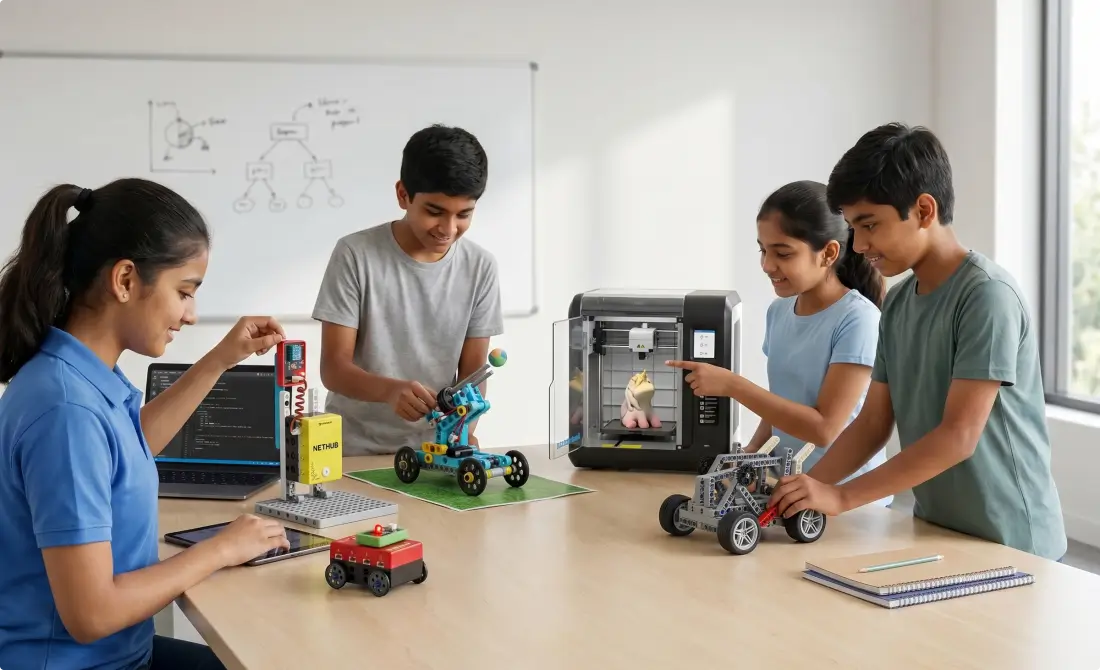
A composite lab for schools supports multidisciplinary and vocational learning through practical activities.
Students can explore:
- Robotics and AI models
- Electronics projects
- Painting and design activities
- Farming and gardening
- Mechatronics experiments
- Coding activities
- Design and fabrication projects
The lab can include 50+ practical activity modules depending on school requirements and grade levels.
For the composite lab for grades 8 and 9, activities can involve robotics programming, AI-based models, automation systems, and computational thinking projects.
For the composite lab, primary activities focus on creativity, exploration, STEM learning, and hands-on experiments.
What is Required for a Composite Lab?
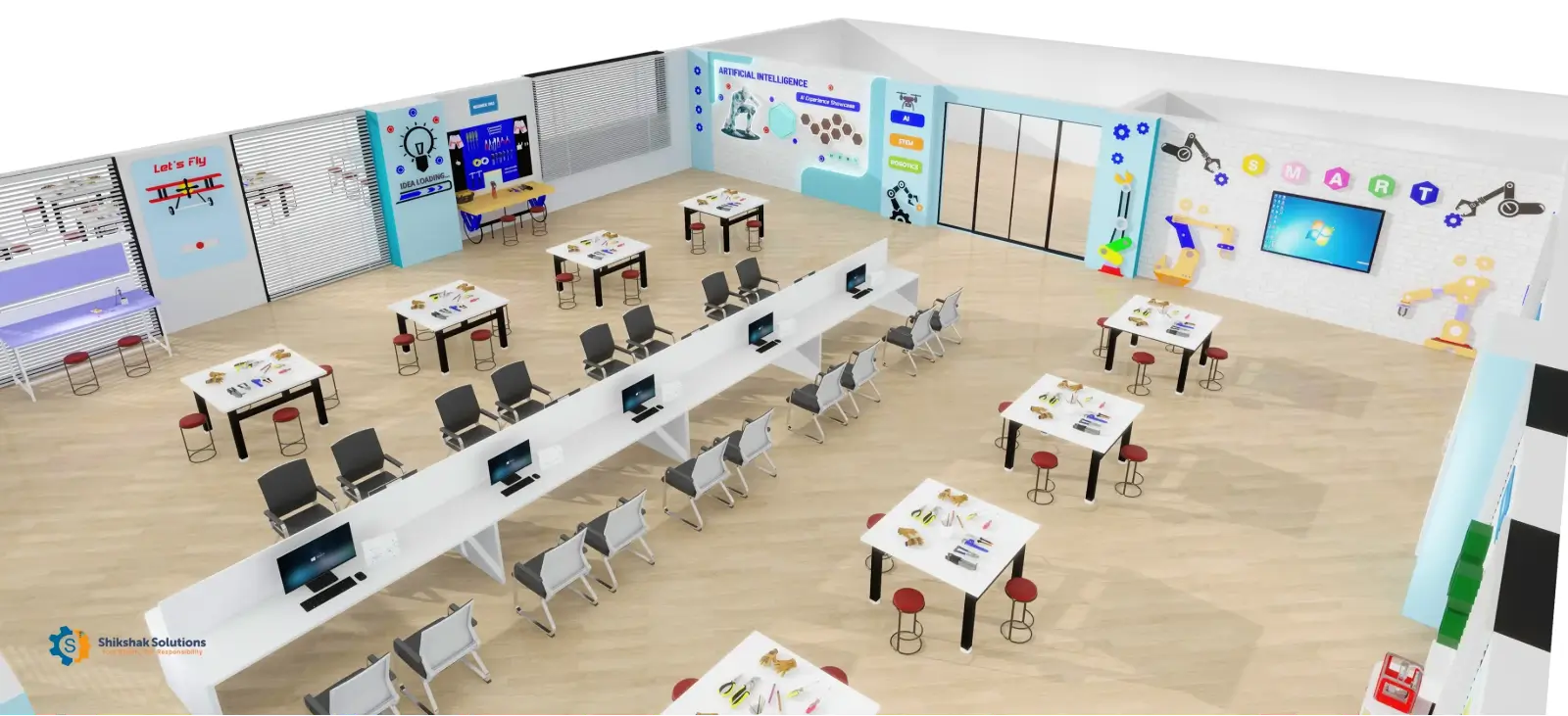
A standard composite lab setup for schools includes:
Room Setup
- Dedicated or flexible classroom space
- Safe and student-friendly infrastructure
- Proper storage and working stations
The composite lab size, according to the CBSE board, should support group activities, movement, and practical learning sessions comfortably.
Tools & Equipment
- STEM and robotics kits
- Electronics tools
- AI and coding modules
- Activity-based learning materials
- Vocational training equipment
Books & Learning Resources
- Structured composite lab syllabus
- Activity manuals
- Student workbooks
- Teacher guides and lesson plans
How to Set Up a Composite Lab?
Complete Setup Support by Shikshak Solutions
Shikshak Solutions provides an end-to-end composite lab setup for schools aligned with CBSE and NEP 2020 guidelines.
We help schools with:
- Lab planning and room setup
- Installation of tools and equipment
- STEM, AI, and robotics kits
- Activity-based learning resources
- Safety and infrastructure planning
Our team ensures the CBSE composite lab fulfils all required educational and practical learning standards.
How to Run a Composite Lab?
To successfully operate a composite lab in schools, institutions need:
- A structured curriculum
- Proper lesson plans
- Trained teachers
- Activity schedules
- Practical learning resources
A well-planned system ensures smooth implementation of hands-on and experiential learning in classrooms.
How Shikshak Solutions Helps Schools
Shikshak Solutions supports schools at every stage of implementation.
We provide:
- CBSE-aligned practical kits
- Books and activity manuals
- Teacher training programs
- Structured lesson plans
- Curriculum support
- Customised solutions as per school requirements
We also offer a 3-year warranty with ongoing support and technical assistance to ensure uninterrupted learning experiences.
FAQs
How does Shikshak Solutions make the lab compatible with the CBSE?
We develop each school composite lab as per CBSE regulations for school composite labs and NEP 2020 recommendations. All our teaching materials, kits, curriculum support, and infrastructure planning are matched to existing educational criteria.
How long does it take to set up a Composite Lab?
Setup time varies based on the school’s demands, room size, and customisation requirements. Installation and setup can typically be accomplished within a few days following planning permission.
Why are AI & robotics important in composite labs?
AI and robotics provide students with hands-on experience in automation, logical thinking, problem-solving, and future technologies.
For example, consider:
- Students can develop a sensor-based smart farming system.
- Build obstacle-sensing robots
- Learn to code with block programming
- Learn automation using robotics kits
These activities help develop both technical and analytical skills.
Learning Outcomes of Composite Lab
What Students Gain
A composite lab for schools helps students develop:
- Creativity and innovation
- Critical thinking
- Problem-solving abilities
- Teamwork and communication
- Vocational and technical awareness
- Real-world practical skills
What Schools Gain

Schools benefit through:
- Better implementation of NEP 2020
- Improved classroom engagement
- Modernised learning infrastructure
- Stronger practical education systems
- Future-ready academic environments
Conclusion
The composites lab in India is an important step toward modern and experiential education. It helps schools create engaging learning environments where students can build practical knowledge along with academic understanding.
Whether it is a composite lab for primary, a composite lab for grades 8 and 9, or a full-school implementation, these labs support future-ready education aligned with CBSE and NEP 2020 goals.
Connect Shikshak Solutions for more details about our CBSE Composite lab solutions: Composite Lab