Table of Contents
Modern education is evolving rapidly, and schools must adopt innovative strategies to create future-ready learning environments. These ideas contribute to better academic and personal development through the creation of smart classrooms, robotics labs, environmentally conscious campuses, and student-friendly infrastructure. A strong school development plan also supports creativity, technology integration, and holistic learning experiences for students. This blog explores practical and innovative ideas for school development that can transform schools into modern centres of excellence.
Why Does School Development Matter?
Better learning and future preparation require school improvement. A strong school development plan improves teaching quality, infrastructure, and student growth.
Areas of Focus
- A Better Learning Environment
Smart classrooms, labs and libraries enhance the quality of learning. - Comprehensive development
Confidence through arts, activities, and sports. - Training of Teachers
Regular training enhances teaching strategies and results in the classroom. - Parents’ involvement
Good communication between parents and schools helps students succeed. - Contemporary Infrastructure
Digital technologies and safe facilities help increase the quality of education.
What a School Development Plan Should Include
A successful school development plan tackles the main variables that contribute to quality education, student growth and long-term development of the institution.
- Learning with the student at the core
- Integration of smart technology
- Contemporary infrastructure
- Upskilling Teachers
- Real Learning Opportunities
- Good safety precautions
- Growth strategies in the long run
School Innovation Challenge
A school innovation challenge often begins when institutions recognise these gaps and work toward practical solutions. Identifying these issues helps schools implement the right steps of the school development plan and improve long-term academic performance.
Understanding the biggest obstacles to school development is crucial before trying new ideas. A successful school development plan starts with recognising what to improve.
Many schools have comparable difficulties that affect learning, student engagement, and progress, such as:
- Old-fashioned teaching approaches which do not satisfy the modern needs of learning
- Lack of smart classroom technologies and limited digital learning tools
- Lack of training of teachers for the new teaching approaches
- Poor infrastructure includes a lack of classrooms, lights and air.
- Low student engagement due to typical classroom approaches
- Obstacles to school curriculum development, limiting practical learning possibilities
- Absence of creativity and problem-solving that fuel innovation
- Access to libraries, labs, and other teaching materials is limited.
- Weak planning tactics are affecting the long-term strength of school development
These problems directly affect how well students do in school and how well schools can adapt to changing academic standards. Without good planning and innovation, institutions may not be able to equip students for future opportunities.
That’s why every school needs a clear improvement plan. Practical solutions and a strong school innovation development initiative may close these gaps and create a more engaging, future-ready learning environment.
What is an Innovative Idea in School Development?
An innovative idea in education refers to a creative and practical approach that improves teaching methods, student learning, infrastructure, or school management. These ideas focus on making education more engaging, skill-oriented, technology-driven, and student-friendly.
Schools are using best practices in school administration to increase learning and create a healthy atmosphere for students and teachers. Innovation not only enhances academic performance but also develops communication, creativity, leadership, and problem-solving abilities among students.
Strong innovation strategies also improve school development strength by creating better infrastructure, modern teaching methods, and inclusive learning spaces. Whether it is digital learning, robotics, or co-curricular activities, such improvements contribute significantly to school curriculum development and student success.
Below are some of the most effective and innovative ideas for students and schools that can transform education systems.
1. Smart Classrooms with Digital Learning
The future of education is in smart classrooms that blend technology with participatory teaching approaches. Schools may create a more dynamic learning environment by using digital boards, online platforms, multimedia lessons and instructional software.
These technologies aid in explaining complex ideas and assist students in learning through images, exercises and rapid feedback. Smart classrooms also allow teachers to adapt lessons to different learning paces, resulting in more effective and equitable education.
Advantages:
- Fosters a contemporary and stimulating learning environment
- Uses digital images to make hard subjects easier to understand
- Supports tailored learning for every learner
- Better classroom participation and attention
- Helps schools to meet future education needs
2. Robotics Lab for Students
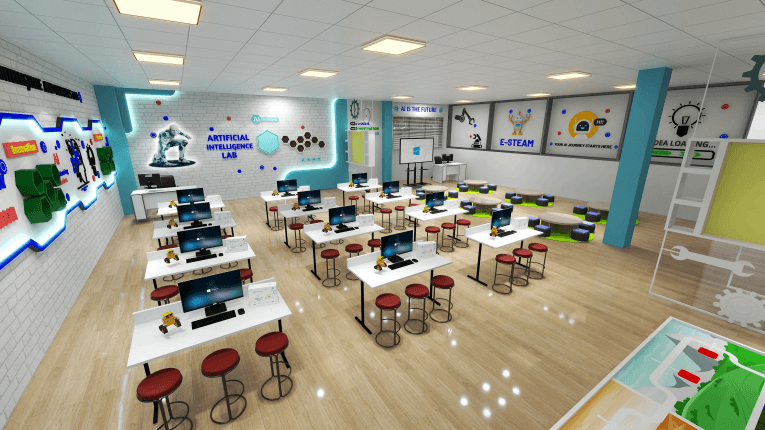
Students can learn about programming, automation, engineering, and AI in a robotics lab, making it a top-tier innovative proposal for school improvement. Students are encouraged to explore new tools and get practical experience with technology through this programme.
Students develop analytical thinking and technical abilities that are applicable to the workforce of the future through hands-on robotics learning, which contributes to the evolution of school curricula.
Advantages:
- Enhances technical and coding expertise
- Fosters better critical thinking
- Promotes learning through doing
- Gets pupils ready for the workforce of the future
- Fosters conceptualisation and originality
3. Green Schools and Eco-Friendly Practices
Eco-friendly schools help students learn their duty to the environment while providing a healthier campus atmosphere. Sustainable school development is done through rainwater gathering, solar panels, tree plantation drives and waste management systems.
These green projects educate youngsters about the value of safeguarding nature and foster good habits from an early age.
Advantages:
- Encourages environmental consciousness
- Less pollution, waste
- Encourages sustainable practices
- Makes healthier environments
- Strengthens school development capability
4. Proper Ventilation in Classrooms
For a learning space to be healthy and useful, it needs to have enough air flow. Fresh airflow helps students and teachers focus better in the classroom by reducing pain and making it easier to concentrate.
A well-ventilated classroom is an important part of a good school improvement plan because it has a direct effect on how well students learn and how healthy they are.
Advantages:
- Helps you focus and concentrate
- Getting rid of health problems
- Makes the environment comfortable
- Helps students do better in school
- Makes the school more productive
5. Good Light Arrangement in the Playground
With the right lights, playgrounds are safer for kids, and sports can continue into the evening. Play places that are well-lit make kids more likely to be active and help them stay active after school.
When planning school buildings, good lighting is one of the best things that can be done to keep everyone safe and get kids involved in the outdoors.
Advantages:
- makes students safer
- Boosts physical health
- Allows for longer exercise times
- Increases involvement in sports
- Helps children grow up healthy
6. Good Quality Flooring
Flooring that is of good quality makes school areas safer and looks better. Accidents are less likely to happen, and upkeep is easy when floors in classrooms, hallways, and playgrounds last a long time.
It is one of the creative ideas for school improvement that is often ignored, but it helps keep the infrastructure in good shape over time.
Advantages:
- Lessens crashes and slipping
- Makes things cleaner
- Makes the school look better
- Boosts durability
- Helps keep moving safe
7. Student-Friendly and Age-Appropriate Furniture
Comfortable and age-appropriate furniture creates a better learning environment by helping students maintain proper posture and stay focused during lessons. Flexible seating arrangements also support collaboration and interaction.
New furniture helps schools improve their lessons by making students more comfortable and getting them involved in the work.
Advantages:
- Comfort and balance are improved.
- Helps you concentrate
- Helps people work together to learn
- Makes the body less stressed
- Sets up an interesting classroom
8. Proper Play Area for Kids
To grow physically and mentally, kids need a safe, big place to play. The right kind of play tools for each age group should be available in schools so that kids can learn while playing and make friends.
With their ability to help students grow their personalities and work together, playgrounds are one of the best new ideas for schools.
Advantages:
- Supports physical fitness
- Encourages working together
- Lifts your spirits
- Brings people together
- helps kids grow up healthy
9. Good Infrastructure
A good education starts with a strong framework. Clean classrooms, modern labs, internet access, safe grounds, and toilets that work right all make for a good place to learn.
Good infrastructure helps schools deal with problems that come up with school growth and makes students happier.
Advantages:
- Improves the quality of learning
- Boosts comfort and safety
- Helps with online learning
- Improves the school’s image
- Makes the school setting better
10. Educational Outings for Students
Field trips give students hands-on experience beyond what they learn in the classroom. Students link academic concepts to real-life experiences through visits to museums, historical sites, science centres, industry and nature camps.
These tours are some of the most effective inventive ideas for school children as they make learning more dynamic, memorable and engaging and improve observation and analytical skills.
Advantages:
- Relates classroom learning to actual life
- Improves observation, hands-on knowledge
- Makes learning fun and interactive
- Stimulates inquiry and discovery
- Promotes holistic student development
11. Proper Teaching Aids and Probes
Today’s teaching aids, like projectors, digital aids, charts, science models, and laboratory equipment, make teaching more interesting and learning easier. Such resources assist teachers in explaining complex concepts easily and increase student involvement.
In the process of school curriculum development, proper teaching instruments provide dynamic learning experiences that increase the clarity of concepts and information retention.
Advantages:
- Enhances conceptual comprehension
- Makes lessons more practical
- Increases student engagement
- supports good teaching approaches
- Increases knowledge retention
12. Well-Established Library
A well-established library is one of the most important pillars of academic growth. A library equipped with books, journals, digital resources, and comfortable reading spaces encourages students to develop reading habits and independent learning skills.
A robust library reflects the strength of school development and fosters research-based learning for long-term academic success.
Advantages:
- Promotes consistent reading habits
- Supports self-directed learning
- Supports research and development of knowledge
- Promotes academic achievement
- Promotes intellectual development
13. Well-Maintained Medical Room for First Aid
For the safety and well-being of the students, a well-equipped medical room is needed. Schools need to have first aid supplies and qualified medical professionals to cope efficiently with emergencies and give quick care when required.
A good school development plan must include a robust healthcare setup since this promotes a safe and supportive atmosphere for pupils.
Advantages:
- Instant medical help
- Increases student safety
- Provides emergency planning
- Builds trust with parents and students.
- Encourages a safe learning environment
14. Time-to-Time Co-Curricular Activities
Co-curricular activities like music, dance, debates, theatre, athletics, and art have an essential part in the holistic development of pupils. These activities permit pupils to find their abilities and create confidence apart from academics.
These are the greatest inventive ideas for students because they help to alleviate stress, promote creativity and give a balanced educational experience.
Advantages:
- Boosts confidence and self-expression
- Promotes creativity and skill development
- Lowers stress at school
- Encourages Collaboration and Communication
- Supports balanced development
15. Upskilled Teachers
Every effective educational institution is built on the foundation of its teachers. Educators are provided with regular training programmes, workshops and digital learning sessions to keep them abreast of new teaching approaches and classroom tools.
One of the most crucial elements in the school development plan is the upskilling of teachers. It assures better learning outcomes and promotes long-term school innovation development projects.
Advantages:
- Better quality of instruction
- Advocates of modern educational approaches
- Helps in the proper management of smart classrooms
- Improves student learning outcomes
- Improves the overall development of the school
These innovative ideas for students and institutions reflect the best practices in school transformation. When applied strategically, they improve school development strength and create future-ready learning environments.
CONCLUSION
The future of education will depend on how effectively schools adapt to changing learning demands and modern advancements. By implementing innovative ideas for school development, institutions can create smarter, safer, and more engaging learning environments that prepare students for long-term success.
A strong school development plan focuses on modern infrastructure, qualified educators, student well-being, and practical learning opportunities. Schools that actively address school development challenges and follow the right steps of the school development plan can build stronger academic foundations while encouraging creativity, leadership, and confidence in students.
Every successful school innovation challenge begins with action and a clear vision for progress. Investing in school development today means investing in future generations. The schools that innovate now will shape confident learners, responsible citizens, and future-ready leaders for tomorrow.